Heading to Rocky Mountain National Park for the first time and wondering how to see the best of it in three days? The park spans 415 square miles, features over 300 miles of trails, and ranges in elevation from 7,500 feet to over 14,000 feet, so a bit of planning goes a long way. This first-timer Rocky Mountain park itinerary hits the classics without wearing you out by the last day. Learn more below!
Before You Go: Permits, Timed Entry, and Passes
From late May through mid-October, Rocky Mountain National Park requires a timed-entry reservation in addition to your park entrance fee. Reservations are released online and go fast for peak weekends. There are two types of reservations to know about.

The Timed Entry+ reservation covers the most-visited zone (Bear Lake Road) and is required from 5 AM to 6 PM; it also allows access to the rest of the park. The regular Timed Entry is required from 9 AM to 2 PM for entry outside the Bear Lake area. Park entrance is $30 per vehicle for the day or $35 for seven days. An America the Beautiful pass covers entry at no extra cost. If you plan to visit multiple national parks in a year, the annual pass is a strong deal at $80. First-timers should give themselves at least 15 minutes at the Beaver Meadows Visitor Center just inside the entrance for a quick orientation and to pick up a park map.
Day 1: The Bear Lake Corridor
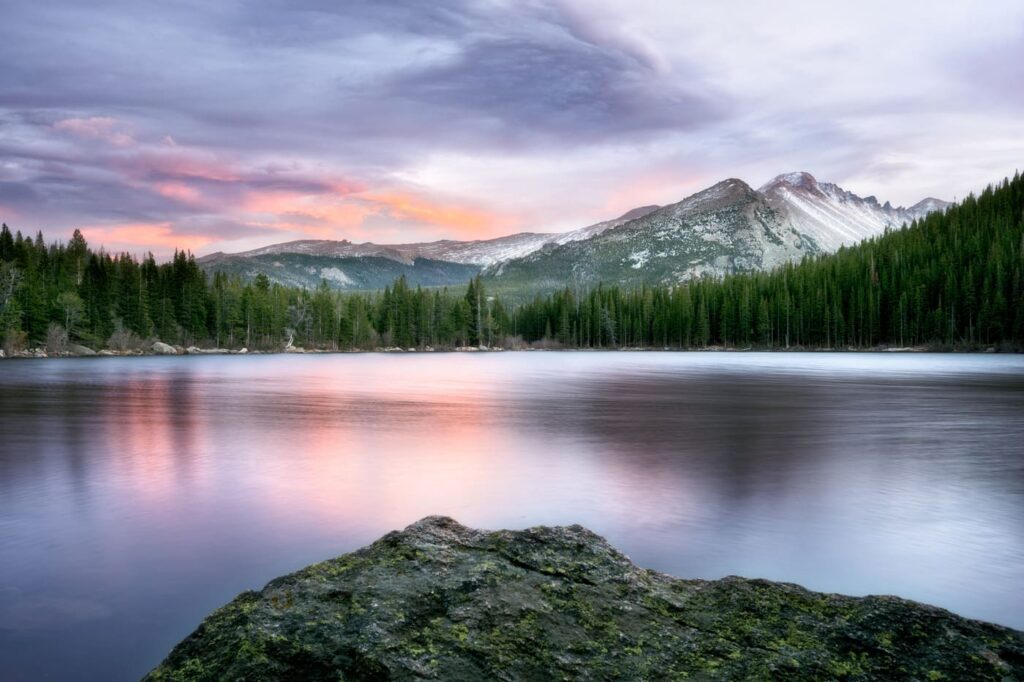
Start with the iconic Bear Lake Road corridor. Get an early Bear Lake reservation (5 to 7 AM) so you can park at the trailhead before the lot fills. Walk the 0.6-mile flat loop around Bear Lake first for the postcard mountain reflection, then pick a next hike based on the group’s energy.
- Sprague Lake (0.9 mi loop, easy): The most accessible walk, great for families and first-timers at altitude
- Bear Lake Loop (0.6 mi loop, easy): the classic photo, must-do for first visitors
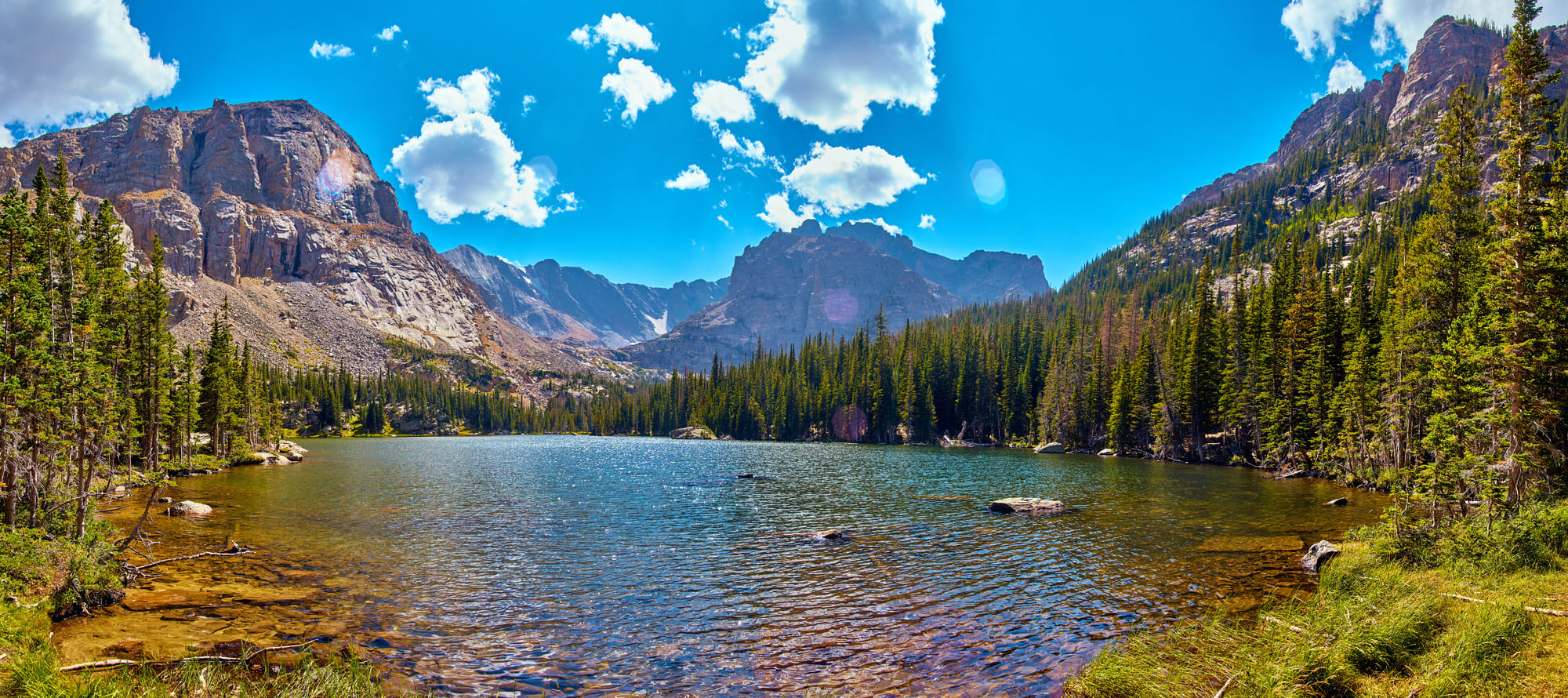
- Emerald Lake (3.6 mi round trip, moderate): passes Nymph Lake and Dream Lake on the way up to a green alpine pool tucked against a granite wall
Bring layers, water, and snacks. Elevation at the trailheads runs around 9,500 feet. Afternoon thunderstorms roll in fast in summer.
Day 2: Trail Ridge Road
Trail Ridge Road is the highest continuous paved road in the United States, cresting at 12,183 feet on the way to the Alpine Visitor Center. Plan a full day to drive it end-to-end, from the Beaver Meadows entrance in Estes Park across the Continental Divide to Grand Lake on the other side. The full round trip takes 4 to 6 hours with stops. Key stops along the drive to check out:
- Many Parks Curve: sweeping views of the meadows below
- Rainbow Curve: a classic pullover with layered mountain views
- Forest Canyon Overlook: the deepest gorge in the park
- Alpine Visitor Center: the top of the road at 11,796 feet
- Tundra Communities Trail: a 1-mile round-trip walk through alpine tundra with elk sightings almost guaranteed
Trail Ridge Road usually opens Memorial Day weekend and closes with the first serious snow in mid-October. Check the road status page the morning of your drive.
Bring warm layers no matter the season. Even a summer day can feel cold at 12,000 feet, and afternoon storms build fast. Fuel up in Estes Park before you go, since there are no services along the road itself.
Day 3: Wild Basin Waterfalls
Day 3 rewards you for pacing yourself. Skip the crowded corridor and head south to Wild Basin, a quieter zone in the southeast corner of the park known for waterfall hikes and old-growth forest. The trailhead is about 20 minutes south of Estes Park off Highway 7.
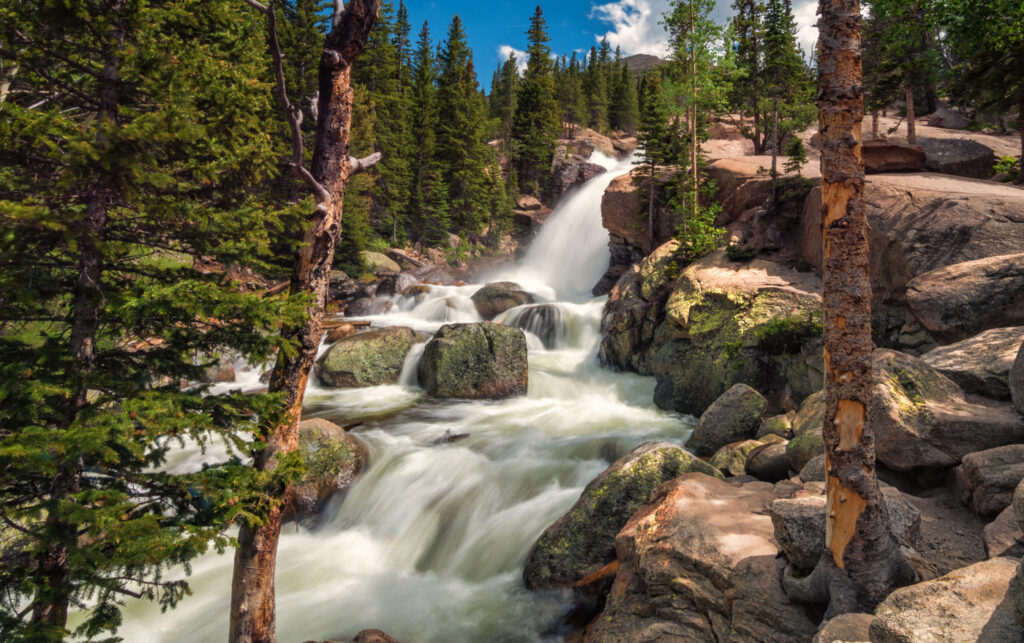
The classic Wild Basin hike is a graduated waterfall walk. Turn around at any of the three main waterfalls based on your group’s energy.
- Copeland Falls (0.5 miles in): a great turnaround for families with little kids
- Calypso Cascades (1.8 miles in): steady climbing through pine forest to a series of tumbling falls
- Ouzel Falls (2.7 miles in): the big payoff, a wide cascade tumbling into a granite bowl
Wildlife Watching in the Park
Rocky Mountain National Park is one of the best wildlife-watching destinations in the West. Dawn and dusk are the best viewing windows year-round. Animals to watch for and where to find them:
- Elk: Moraine Park, Horseshoe Park, and the Beaver Meadows entrance road, especially during the fall rut (mid-September through mid-October) when hundreds of bugling bulls fill the meadows
- Bighorn sheep: Sheep Lakes area in Horseshoe Park in early summer mornings, where rangers sometimes stop traffic for crossings
- Moose: rare on the east side but occasionally show up in the Kawuneeche Valley near Grand Lake
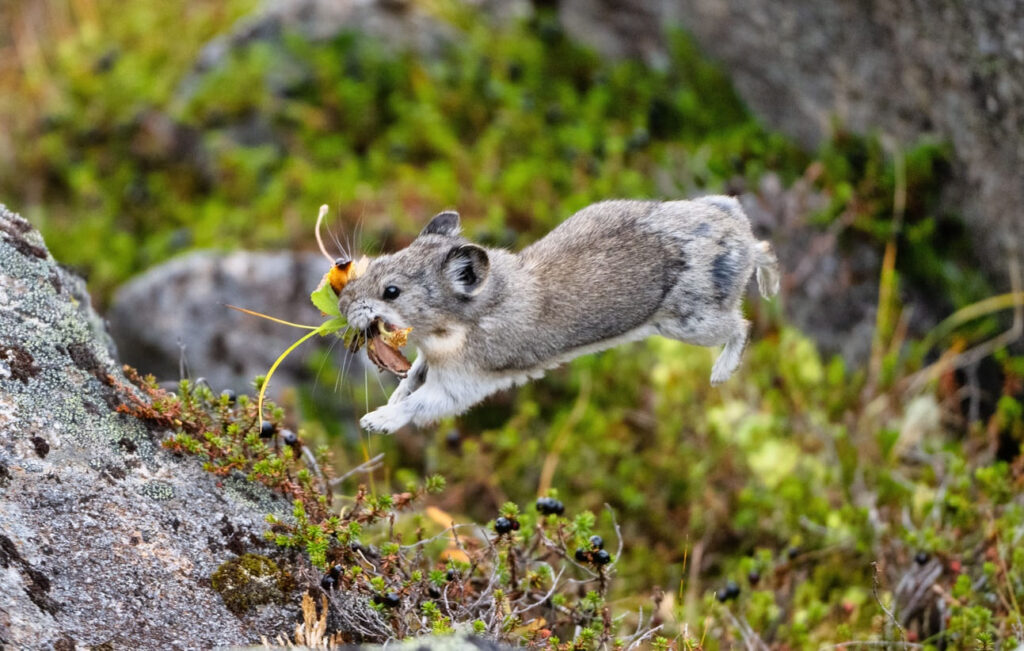
- Pikas and yellow-bellied marmots: alpine boulder fields at higher elevations, especially along Trail Ridge Road
Tips for safe and respectful viewing:
- Bring binoculars or a telephoto lens for close-up shots
- Keep a legal 75-foot distance from elk and 120 feet from bears
- Never approach wildlife for photos. Rangers issue citations, and the fines are steep
- Turn off your engine at pullouts to avoid startling animals
- Skip flash photography, especially at dawn and dusk
Book Your Stay with Mountain Village at Lake Estes
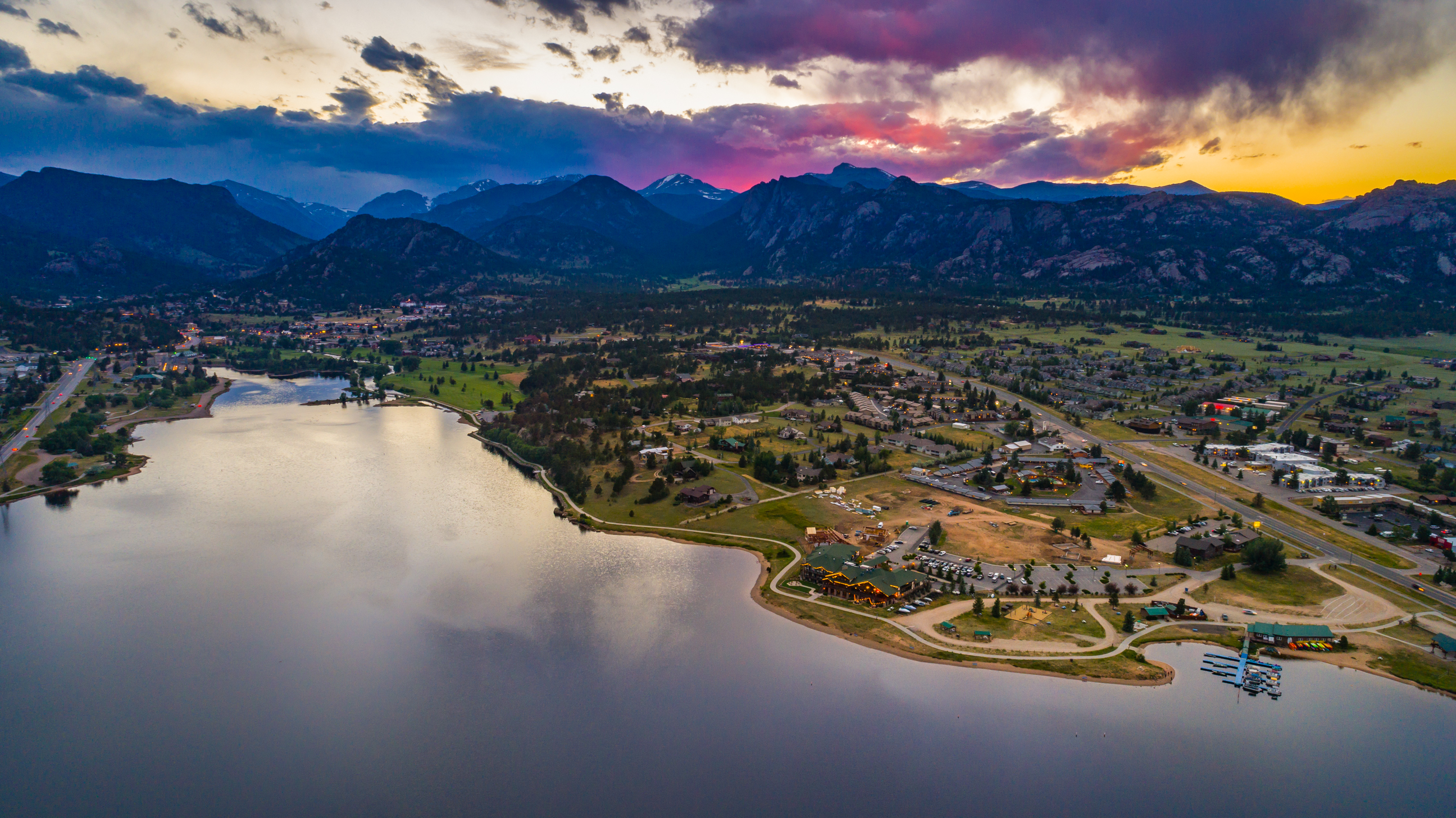
Mountain Village at Lake Estes sits five minutes from the Beaver Meadows entrance, right on Lake Estes, with a 4-mile paved path around the water for easy sunrise walks. Our log cabins sleep two to eight guests and feature full kitchens, fireplaces, hot tubs, and dramatic mountain views from the windows. Contact Mountain Village at Lake Estes to book your stay!